• Skip to main content
  • Skip to primary sidebar

PHYTOEXTRACTUM

The original banner for Phytoextractum
  • Home
  • Log In
  • Buy Kratom
    • Kratom Powder
    • Kratom Extract
    • Kratom Capsules
    • Kratom Shots
  • FAQ
  • Free Shipping!
  • About Us
  • Discount Codes
  • Free Stuff
  • Resources

Phyto

All About CBD: A Brief History of Hemp

April 30, 2019 by Phyto

At this point in 2019, we have all heard of hemp before. Known by many names and often confused with marijuana, hemp has been around on the Earth for at least 10,000 years – and very likely for more years than that.

Most people think of hemp, they usually think of hemp’s cousin (marijuana, a colloquial term for cannabis with intoxicating psychoactive effects). They imagine these products to be more modern additions to the world because of the way they are presented in the media.

Remember, however, that marijuana and hemp are simply the two most well-known species of the same plant genus, cannabis. They are similar, but they have different compounds and characteristics that affect how they can and cannot be used.

Hemp is not a modern crop; the history of hemp goes back for longer than you can imagine!

What is the history of hemp, and how has that history shaped the way that hemp is seen and used today? Our brief walk through the history of hemp will present the key points so that you can gain a more complete understanding of this important plant.

Hemp’s World Arrival

Most scientists believe that hemp has been around for more than 10,000 years, and that is most likely true! Carbon dating suggests that hemp seeds and oils found are more than 10,000 years old, but there could be variation in that finding.

Hemp’s first traces were found in parts of modern day China and Taiwan, and those traces date all the way back to 8000 BCE! The remnants that have been found are hemp cords, and there is also some evidence that it was used as food as well.

When humans first transitioned to agricultural societies, it is very likely that hemp was one of the crops cultivated.

From the region where hemp first originated, it spread across the entire world. Other than in Asia, evidence of hemp has been found in Africa, Europe, and South America. It’s even mentioned in numerous religious texts as a kind of sacred and powerful crop. This makes a lot of sense because hemp was used to create many parts of life: shoes, paper, ropes, clothes, food, and more!

Moving Forward

Hemp would continue to be important across the world for the next few centuries. The uses and importance of hemp would not falter – and now we’re starting to see even more innovation in hemp products and applications.

For example, hemp oil and fiber were used through Henry VIII’s reign to help construct battleships, sails, pennants, and more. Hemp paper was also being used in Bibles, maps, documents, and more throughout history.

Early American Introduction

Hemp was brought to North America in 1606, and it has been a part of American life in one way or another since them. Like in other societies, hemp was used in American society to create rope, paper, lamp fuel, and more!

The founding fathers of America even touted the importance of hemp, and America’s Declaration of Independence was written by Thomas Jefferson on – you guessed it – hemp paper.

In fact, hemp was so important that farmers in some states were legally required to grow hemp on their land or they would face a fine. That fine (and other taxes) could even be paid with hemp as a form of currency!

Changes in the Early 1900s

Up until the early 1900s, hemp continued to be used largely in the same ways that it had always been used. While cannabis had popped up before 800 BCE in various texts, the primary benefits of hemp still had more to do with manufacturing and farming, not relaxation. Hemp has consistently been the more important and economically impactful crop of the two.

That is until the early 1900s in America. At this time, the US government was determined to cut down on drugs such as marijuana. Hemp was grouped in with this crop and was highly taxed after the Marijuana Tax Act of 1937 was enacted. This nearly killed the hemp industry altogether.

Hemp For Victory

Things would remain this way until 1942, when they needed and encouraged 400,000 acres of hemp to be planted in order to help support America through the war. Check out this video that showed how hemp was promoted during wartime:

Most people today cannot imagine that the government would release such a film, and a large reason for that is because most people think that hemp is the same exact product as marijuana. While both plants are related, hemp is not cannabis, and they are not used in the same ways.

Post-War Decline

Once the war period ended, however, everything was reverted to the way that it was. Hemp was no longer OK to grow, and no new hemp farms would be started from 1957 until 2007. Hemp farmers had to find something else to do, and many filed for bankruptcy.

Hemp farms were officially outlawed along with the substance itself in 1970, and it would take more than 30 years for hemp to be released from the drug-fighting efforts of America.

Today

Today, food-grade hemp products are allowed to be sold in America, and there are hemp farms helping to create dietary hemp for body care, clothing, and textile products. In 2014, the Farm Bill allowed hemp cultivation as a research effort, and, more recently the cultivation of industrial hemp was federally legalized with the 2018 Farm Bill.

Understanding the importance of hemp on its own can help to explain why some people become outraged when people suggest that hemp seed oil and similar products are the same as marijuana, THC, or even CBD oil (CBD is a cannabinoid present in both hemp and marijuana, but it is extracted from hemp plant matter, not hemp seeds). All of these products have their own benefits, but they should not be confused for one another.

Hemp is a very important crop today as much as it has ever been. As the world changes and agriculture regains its importance in our world, the growth of the hemp industry can also be seen.

We’re excited to see how hemp will once again revolutionize the world in the 21st century!
Filed Under: CBD Tagged With: cannabidiol, cannabinoids, cannabis, CBD, hemp, history, industrial hemp

4 Best Ways to Take Kratom: Which Do You Prefer?

April 25, 2019 by Phyto

Kratom, officially known as Mitragyna speciosa, is a very special plant extract. It’s a tropical tree that can be taken in many forms, and those forms have been used by societies where Kratom is native for hundreds, if not thousands, of years. Before you buy kratom online, it’s important to know the best way to take it though. In this article, we’ll discuss the 4 most common.

From teas to powders to capsules, Kratom users around the world are mixing up how they will take their Kratom every single day! And really, there are a lot of different products and methods that they can choose from.

When you’re new to Kratom, you might not know how which method you want to try or what the difference between those types of Kratom really is. How can you know without spending months trying them all?

We’ll introduce all the pros and cons to you today so that you can make that choice for yourself!

Teas

One of the most common ways for people to take Kratom is by making it into a tea. You can use both loose leaf and powder to make tea, but you’ll need to spend a good bit of time figuring out the exact brew that you like and will enjoy drinking.

When buying loose leaf Kratom, it’s often known as crushed leaf.

Most people find that taking tea is the most effective way to enjoy Kratom. The basics of making tea are simple. All that you need to do is allow them to steep in boiling water for about 20 minutes before straining, but this isn’t the only way to make Kratom tea! In time, you’ll learn many methods.

Buy Kratom online at Phytoextractum

There are a lot of different things that you can add to tea, but the most common ones that people find to improve the general flavor of Kratom tea are:

  • • Fruits (particularly citrus fruits)
  • • Honey
  • • Sweeteners
  • • Juice (lemon, orange, and pineapple are all great choices)

Regardless of what people recommend that you add to your tea, don’t be afraid to experiment! Only you can decide what flavors you like, and the only way that you’ll find the perfect combination is to change it up every single time that you make a batch of tea until you get it right.

Pros of Kratom Tea

  • • Easier on your stomach than other preparations
  • • Can add your own ingredients to change the taste
  • • Can be batch prepared in advance

Cons of Kratom Tea

  • • Takes time to prepare
  • • Can be very bitter
  • • Will need to try various adjustments to get the flavor right

Kratom Powder

The other most popular way to take Kratom is to use Kratom powder. Powder can be used as an additive to other drinks or smoothies, or it can be used more directly if taken by using capsules instead.

Because of how convenient taking powder Kratom is, this is quickly becoming the most popular form. It’s simple to buy in bulk, can be taken discreetly, and doesn’t require an acquired taste like tea does!

Some of our favorite ways to combine Kratom powder are into yogurt, smoothies, drinks, dressings, and more!

Kratom Powder Pros

  • • Tends to be more affordable
  • • Easier to buy and store in bulk
  • • Versatile
  • • Can be put into capsules for easy digestion & storage

Kratom Powder Cons

  • • Can cause upset stomachs due to increased amount of plant matter
  • • Powders can be messy
  • • Can be harder to measure unless using capsules

Kratom Capsules & Tablets

If you are looking for a very easy and discreet way to take Kratom, you might want to try Kratom tablets or capsules.

Kratom tablets are made when high-pressure machinery creates a tablet by simply squeezing the powder together as hard as possible. They stay together without any binding agents as long as the proper machinery is used to make the tablets. Plus, you don’t have to make them yourself as you might need to do with powder capsules!

Kratom gum is also available. You should keep in mind that gum will likely have binding additives, so you should decide if you are okay with that or not.

Tablet Pros

  • • Very discreet
  • • Easy to carry around with you as needed
  • • Easy to measure

Tablet Cons

  • • Might contain additives
  • • Might contain chemicals
  • • Might contain added flavors
Banner For Kratom Products

Kratom Extracts

Like CBD extracts, it is possible to create a pure extract from Kratom plants. These Kratom extracts have been used for many years in some areas of the world and can be a great way to take a concentrated amount of Kratom.

The extracts are often called full spectrum kratom because as many alkaloids as possible are pulled from the plants. If you want an easy intake method, full spectrum Kratom extract is a great way to do just that.

The extraction method usually goes something like this:

  • • Ethanol, water, or CO2 solvents are used to soak the plant and begin the extraction method. Usually, this involves a certain amount of soaking and heating as well.
  • • The plant’s alkaloids are pulled out of the plants.
  • • The alkaloids solvents are blended with the base extraction, and other natural flavors may be added as well.

If you want to avoid taking any type of extraction that includes alcohol, you can always check in with us about which extracts do and do not contain alcohol!

Extract Pros

  • • Very easy to take
  • • Can be dissolved into other liquids
  • • Typically contain more alkaloids
  • • Need to take less product to be effective due to higher concentration

Extract Cons

  • • Missing balanced plant extract; contains most alkaloids
  • • Can upset some people’s stomachs

Kratom: The Choice is Yours

There’s not a single way that you have to take Kratom. Powders can be mixed into smoothies, or teas can be brewed with honey and lemon flavors to make a tasty concoction that you can enjoy when needed. Or, you can simply take a capsule or tablet to get a direct serving of Kratom powder.

The point is that there are no specific rules about how you have to take Kratom. You can try these different ways; you might even find that you enjoy more than one ingestion method! In the end, the choice is yours.

Filed Under: Kratom Tagged With: extracts, kratom, methods, mitragyna speciosa, powders, tablets, tea

All About CBD: Basics of the Endocannabinoid System

April 18, 2019 by Phyto

“Endocannabinoid” is a word that has become exceptionally popular these last several years. Thanks to research and scientific breakthrough, we’re discovering more answers to our questions surrounding endocannabinoids and phytocannabinoids like cannabidiol (CBD) and tetrahydrocannabinol (THC), and how they affect the receptors in our bodies.

The System

The endocannabinoid system (ECS), named after the cannabis plant itself in the 1990’s, makes its home in the entirety of the human body. Endogenous cannabinoid receptors are found in our organs, connective tissues, immune cells, reproductive tracts, and brains; each location performing different tasks with the same goal – maintaining stability within the body to regulate the effects of external fluctuations, which we know as homeostasis.

We have discovered that the endocannabinoid system plays a huge part in homeostasis throughout not only our bodies, but every vertebrate’s body as well. Not only useful for homeostasis, scientists have uncovered multiple other physiological processes that the ECS is involved in, such as pain-sensation, memory, mood, appetite, and more.

Taking a deeper look into the makeup of the system, we find three major players: the endocannabinoids, the receptors, and metabolic enzymes.

Endocannabinoids

These are molecules that are naturally synthesized by humans and animals that, of course, have the system within. Specializing in intercellular communication, these lipid metabolites (organic fatty compounds) are produced instantly by the body when needed and connect to and activate cannabinoid (CB) receptors. Endo, in Latin, means “within,” so we can understand that endocannabinoids are from inside the body. Cannabinoids, without the prefix, are external compounds that function with the same receptors as endocannabinoids.

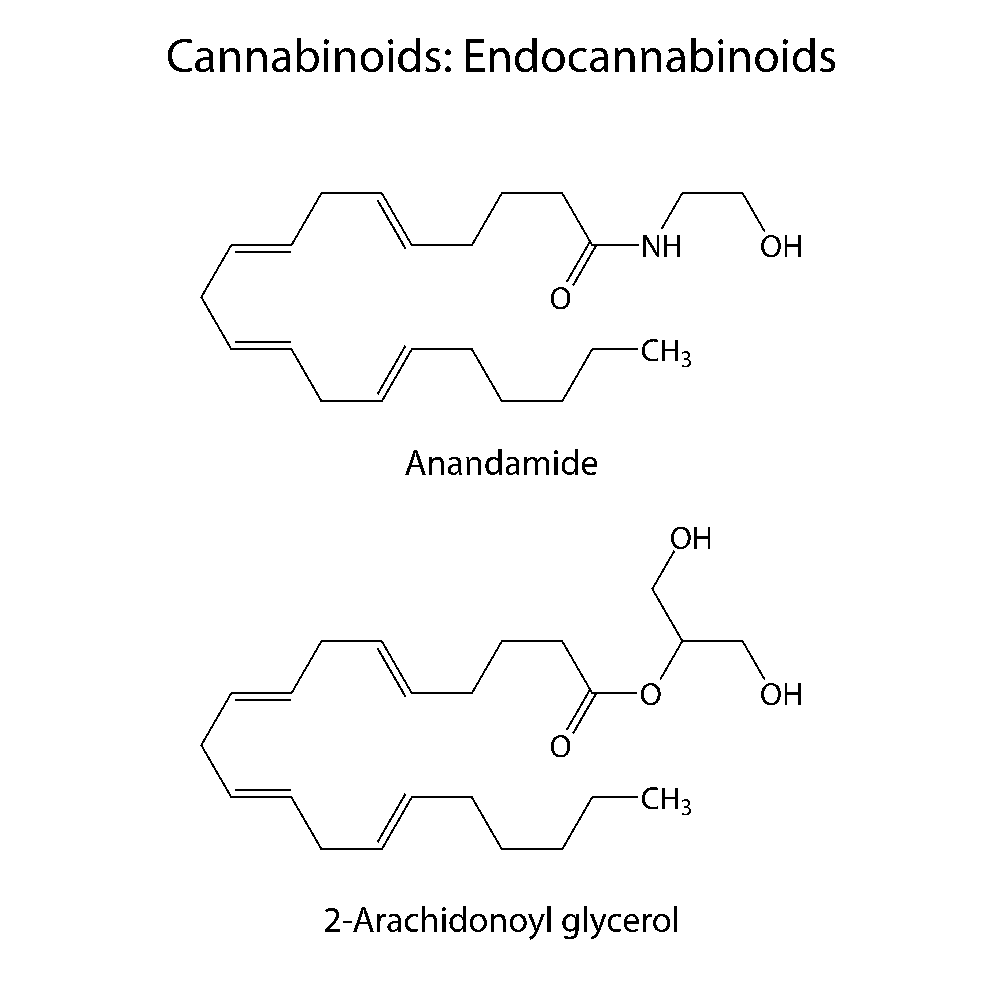
The dominant endocannabinoids are anandamide and 2-arachidonoylglycerol (2-AG, thank goodness).

Anandamide, named so in homage to the Sanskrit word “ananda” meaning happiness, is a neurotransmitter synthesized in the brain that binds to CB receptors. Anandamide is studied to positively affect mood regulation, feelings of anxiety and fear and more, and aptly nickenamed the “bliss molecule.”

2-AG is an endogenous ligand (specialized protein) for the CB2 receptor and an agonist for the CB1 receptor. This protein helps regulate appetite, pain management and immune system functions.

The Receptors

CB1 and CB2 comprise the main types of receptors in the ECS, with more being studied as we speak.  

CB1 receptors are principally located within the brain and central/peripheral nervous system, with branches reaching to the spinal cord, liver, kidneys, digestive tract, muscles, and lungs as well. These receptors are known for their participation in cardiovascular activity and motor control, as well as expressing the psychoactive effects of THC.

CB2 receptors take their place in the immune and gastrointestinal system. Although seen in the brain and possibly the peripheral nervous system, they don’t present as densely as CB1 in the same areas. Nearly every disease that poses a detriment to human health has shown a change in CB2 receptor expression and endocannabinoid levels in general.

How do these spectacular physical structures work? I think data scientist Nick Jikomes portrayed the process flawlessly:

“Cannabinoid receptors sit on the surface of cells and “listen” to conditions outside the cell. They transmit information about changing conditions to the inside of the cell, kick-starting the appropriate cellular response.”

The Enzymes

The role of metabolic enzymes in the ECS is to decimate the endocannabinoids immediately after their purpose is fulfilled, preventing the molecules from loitering in the body. The special enzymes that take care of this are fatty acid amide hydrolase (FAAH) and monoacylglycerol lipase (MAGL).

FAAH hydrolyzes anandamide, while MAGL is responsible for the metabolism of 2-AG.

CBD and the ECS

With the knowledge that anandamide interacts with our bodies in such positive ways, don’t you think we should try to inhibit its breakdown? If you do, then that is a perfect motivator in making CBD a regular part of your wellness routine.

FAAH’s process of hydrolyzing anandamide is inhibited by CBD, thus increasing activity of the bliss molecule. This is accomplished by CBD blocking access of endocannabinoids onto transport molecules, temporarily disabling FAAH’s mechanism.  

Isolated CBD can’t maintain all the work on its own, however, so thanks to the entourage effect we see major benefits to our whole endocannabinoid system, not just a concentrated portion of it.

Final Thoughts

Thank you for sticking around and learning about the ECS! There’s so much more to learn, and sometimes all of this can get complicated. I encourage you to stick with it and educate your friends and family that may have questions on what we already know.

Filed Under: CBD Tagged With: cannabidiol, cannabinoids, CBD, ECS, endocannabinoid system, hemp

All About CBD: How are Hemp and Marijuana Different?

April 15, 2019 by Phyto

Allow me to start with the basics – Cannabaceae is the family of flowering plants in which the genera of hops, nettle trees, and cannabis exists. Within the genus of cannabis lies two classifications: Sativa and Indica.

For the past several years, cbd and cannabis products have been scientifically studied and researched more than ever before. As we learn new things about the botanical, we realize what misinformation has been thought to be correct for hundreds of years, which is why many people simply do not know the differences of cannabis, hemp, and marijuana.

Although the biological structures of marijuana and hemp are indeed different, they are both species of Cannabis Sativa.

The Look

Anyone with an unpracticed eye may very well confuse the two if asked to imagine the plants in their heads, but once you’re given the info, their distinctions are easily discernible.  

Hemp tends to be tall, growing between 7-13 feet in height. The branches and leaves are concentrated towards the top of the plant and bear a thinner semblance than marijuana.

Marijuana on the other hand usually grows shorter and stubbier, possessing broad leaves and dense buds. This plant requires a strictly controlled environment to thrive, unlike hemp which needs less attention.

If you were to see a plot of land growing only hemp next to another plot growing only marijuana, you would see the differences instantly. There shouldn’t be any cannabis-rich plots of land so closely bunched however, because cross-pollination from hemp to marijuana would compromise the cannabinoid content.

Cannabinoids

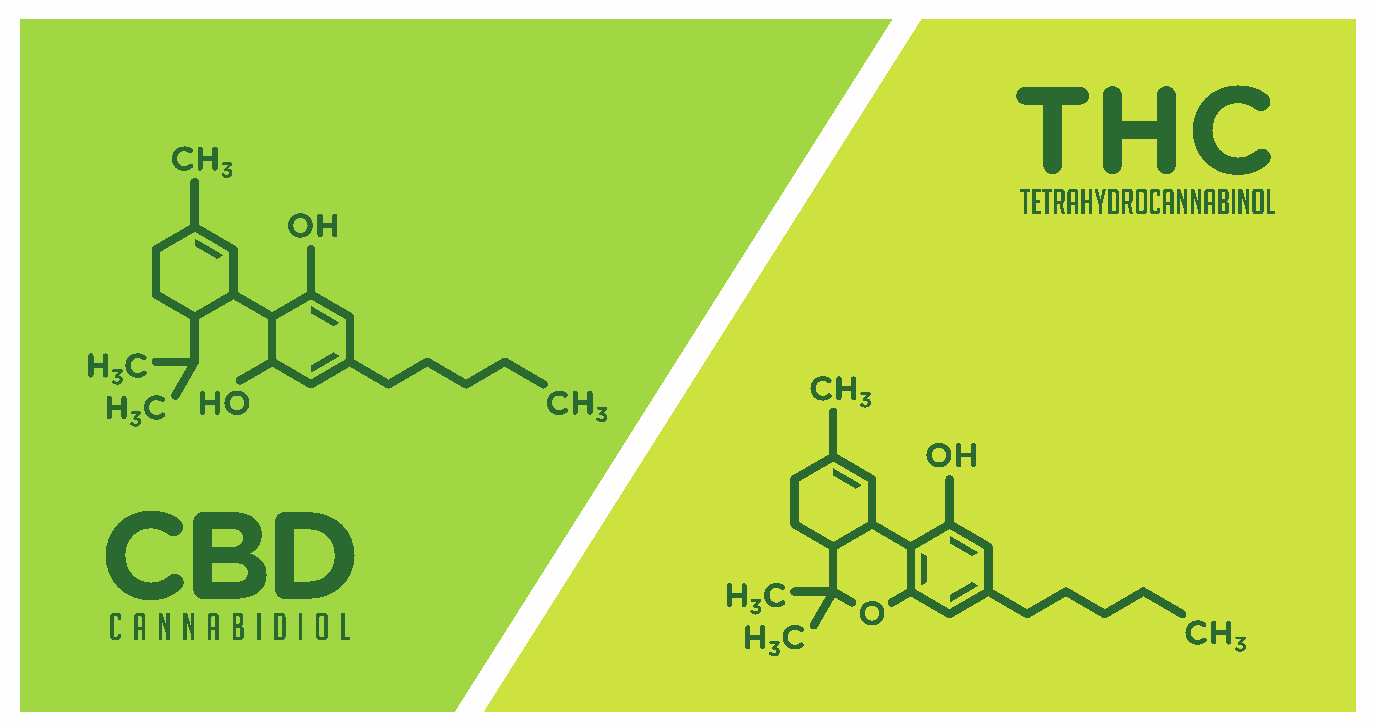
One of largest distinctions we see in the industry comes down to the two famous cannabinoids that are present in both marijuana and hemp: Tetrahydrocannabinol (THC) and Cannabidiol (CBD). The amount in which the compounds are present in each plant is drastically different however. These compounds are nearly identical in that the sole microscopic difference in chemical makeup is a single atom.

How can these two be drastically different if they appear virtually uniform? It’s surprising how this small of a variance can affect our endocannabinoid system.

These cannabinoids, among others found in cannabis, have shown tremendous benefits for human health. The largest contrasting attribute however is that THC possesses psychoactive properties, in which the user can feel “euphoria,” whereas CBD does not. Further, CBD may even inhibit the saturation of THC in the brain when consumed.  

Uses

The cannabis plants have been revered for millennia due to their vast range of uses. In ancient times, they were harvested and crafted into building materials like rope, as well used for medicine and religious ceremonies.

Funny as time flies and some things remain the same. In modern days, we are discovering that there is an illimitable amount of ways these plants can help us, from ecotechnological advancement to treating epilepsy.

The noticeable difference of marijuana and hemp however is the amount in which the chemical cousins are produced. Marijuana contains much higher amounts of THC (5 to 30+ per cent) and lower traces of CBD. This is the opposite truth of hemp, as it contains a higher amount of CBD and next to nothing in THC (0.3 to 1.5 per cent).

With these perceptions, we can understand their uses in society better. Hemp, due to its stature, availability and chemical makeup, is superior for industrial applications and extracting CBD with miniscule amounts of THC. Marijuana is preferred for recreational and medicinal uses due to its higher THC content and entourage effect with CBD.

Legalities

This is always an interesting topic because there have been constant changes in United States cannabis legislation for years.

Keeping up with current laws is absolutely vital for cannabis businesses, both in agriculture and retail, to survive. There are so many details that go into the farming, manufacturing, distributing and selling that could change at any moment, so adjustments must be made quickly and correctly.

Marijuana is and has been federally illegal since the Controlled Substances Act of 1970. Colorado and Washington state prepared bills suggesting the regulated use of recreational cannabis, both of which were successful. Following their lead, we now have 10 states that allow for recreational use. Even before these measures however, medical marijuana was available in certain U.S. states, with additions to make the current total 33.  

Hemp was lumped in with marijuana in the act of 1970, despite its distinguishing qualities. Colorado once again lead the way and legalized the commercial cultivation of hemp on the state level. It was the following year that the U.S. hit a milestone in the industry when President Obama signed the Farm Bill update of 2014, which finally redefined hemp as a separate entity from marijuana and allowed research and scientific development.

As of December 11th, 2018,  the Senate voted 87-13 in favor of the updated Farm Bill of 2018, and the House of Representatives on December 12th voted in favor 386-47. The outcome of the bill passing? $867 in subsidies divvied between farmers, reinforcing economic growth and marketing for Farmers’ Markets, rejecting stricter limits on food stamps and, of course, legalizing hemp.

Final Thoughts

Hemp and marijuana are amazing plants and provide an astounding volume of distinct uses. Now that you know their primary differences, you can begin or continue your wellness routine feeling knowledgeable and hopefully more comfortable; that’s what I’m here for! If you have any questions or comments, you can head over to @phytoextractum on Twitter.

Filed Under: CBD Tagged With: cannabidiol, cannabinoids, cannabis, CBD, CBD oil, farm bill, hemp, industrial hemp, legal, marijuana

Lab Testing: Why Buying Lab Tested Kratom Is Important

April 10, 2019 by Phyto

Researching Kratom strains, powders, and vendors will often bring you to these words: lab tested Kratom. Often, sites (ours included!) will talk about why buying Kratom from a vendor that does lab testing for quality on their Kratom is important.

But what exactly does that mean, and why does it matter so much?

We think it’s important for Kratom consumers to be able to make informed decisions about the products that they buy and the vendors that they buy from. To be able to do this, you’ll need to know a bit more about what lab testing Kratom involves, how companies do it, and why it matters so much. Let’s get into it!

What Is Kratom Lab Testing?

Like with all botanicals, it is possible to run Kratom through a series of tests at an accredited testing laboratory to ensure that the powder is what the supplier says that it is.

In the case of Kratom lab testing, the testing is usually done to ensure all of the following:

  • • Identity, i.e. that the plant material is actually Kratom
  • • No pathogens or other contaminants present
  • • Sample does not contain high levels of heavy metals
  • • Kratom isn’t mixed with an undisclosed substance
  • • Amount of common alkaloids, mitragynine, and 7-hydroxymitragynine
  • • Alkaloids are real

For most commercially available Kratom, the amount of mitragynine present is not typically more than 2%. There is usually even less 7-hydroxymitragynine in any given substance unless it has been processed further into a tincture or extract.

As far as pathogens, it is possible that Kratom that is not processed safely by the supplier could contain the following:

  • • Coliforms
  • • Salmonella
  • • Mold or yeast

Finally, the following heavy metals should be tested for in Kratom supplies:

  • • Arsenic
  • • Lead
  • • Mercury
  • • Cadmium
  • • Nickel

When a Kratom seller tests their supply in a lab, they are typically testing for pathogens, metals, and alkaloid content to ensure that their customers will only be sold high-quality Kratom that is not dangerous to use.

Why Is Kratom Lab Testing Important?

The biggest reason that Kratom lab testing is important is to ensure both the safety and the quality of the product that is being sold to Kratom consumers.

Contaminated Kratom can cause illnesses such as a Staph or Salmonella infection, and both of these conditions can be dangerous if not treated properly. If a Kratom user gets sick from their Kratom, they might not even know that either of these infections is a risk to them!

For that reason, it’s very important that vendors do their due diligence and have their supplies regularly tested for quality and safety purposes. Without testing, they could be accidentally giving their customers an adulterated or contaminated product.

Testing is always important when consumables are being sold, and that truth is no different when it comes to Kratom.

Advocating For Safety Testing

Another reason that it is very important to test Kratom for safety is to help dispel many of the misunderstandings and misconceptions about Kratom consumption that are commonly spread.

Kratom consumption is currently a grey zone in terms of its legality. While it has not been banned in most places, it is also not regulated in most places. Instead, Kratom waits somewhere in the middle. And all it takes is one bad batch of Kratom for it to be ruled illegal and dangerous.

As a Kratom vendor, it is part of our responsibility to the community to help prove that Kratom can be safe when used and vetted properly. Like anything that you eat, it can be dangerous if the supplier was not honest about its source. For that reason, it is incredibly important to test Kratom.

Having solid testing proof about the composition and safety of Kratom – in the form of Certificates of Analysis from accredited labs – will help to advocate for its regulation as a safe and beneficial product. Any vendor that sells a product without testing is putting both their customers and the entire Kratom community at risk due to bad products.

How To Know If Lab Testing Was Done

Now we’ve come to another difficult part of understanding what goes into lab testing Kratom: how do you know that the testing was completed?

First, you’ll need to check the website of the vendor in question. Because there are not yet any widespread systems of proving whether a vendor tests their product or not, you will need to a little bit of research on your own.

Some vendors have worked with the AKA – American Kratom Association – to show that they regularly test their product and have other Good Manufacturing Practices in place, and this may be noted on their website by a seal that they are GMP Qualified.

If you do not see evidence of lab testing on a company’s website or marketing materials, ask for Certificates of Analysis. Any reputable vendor should be willing to provide you with this document that guarantees lab testing and quality assurance.

Without the legitimate proof demonstrated by Certificates of Analysis, it will be up to you to do the investigative legwork and decide whether or not you believe vendor claims that they tested a product.

Our Testing Policy

Here at Phytoextractum, we are very proud of our commitment to only selling high quality products that pass lab testing and meet all of our other rigorous standards.

In fact, we were one of the first companies to be recognized by AKA as a GMP Qualified Kratom Vendor!

This means that we have proven to AKA, through an independent third-party audit, that we follow all of the standards for both processing and manufacturing Kratom to ensure our customers’ safety. You can read our final audit report which confirmed our status as GMP qualified here.

We hope that today’s article has helped you to get a more complete understanding of what it is that we mean when we say that we are dedicated to lab testing our products to ensure that you are getting the highest quality Kratom that we can possibly offer to you at this time.

Filed Under: Kratom Tagged With: GMP, kratom, lab testing, mitragynine

Response to FDA Statement on Heavy Metals

April 5, 2019 by Phyto

April 5, 2019

Dear Valued Phytoextractum Customers,

We know many of you have seen the FDA’s most recent statement on kratom, regarding what they’re calling high levels of heavy metals found in kratom products. At Phyto, we hold the health and safety of our customers as our highest priority, and we take our responsibility to provide pure, safe products seriously. Because of this commitment to our customers, we are constantly working to stay current with Good Manufacturing Practices, and we recently underwent a third-party audit to validate our GMP compliance.

We’d like to address a few things in the FDA’s statement:

First, it’s troubling that we have never been contacted by the FDA about high levels of metals in our products. We are registered as a dry food facility with the FDA, which led us to believe that it was incumbent upon them to alert us to any concerns regarding the safety of our products.

Phytoextractum has no information regarding the samples the FDA used in their tests, including when or how the FDA acquired our products or when they tested the samples they obtained.

We can only assume that they were part of samples taken and tested as part of an FDA investigation of an unrelated food safety issue in March of 2018. FDA representatives were at our facility for several days, inspecting, taking samples, and meeting with our company. They never mentioned an issue with metals at that time.

If these samples are from that investigation, their product lots were pulled from the market over 12 months ago as part of the extensive recall we did in cooperation with the FDA. Further, it would indicate that the FDA was rehashing old information, not in an attempt to protect the public, but as a way to target and further stigmatize kratom. 

Additionally, the numbers the FDA is publicizing are misleading. While their recommendations for the presence of heavy metals use the ‘micrograms per kilogram’ format, their recently publicized metal levels are represented in the ‘nanograms per gram’ format.

The FDA is not changing the numbers, i.e. the analytical data, but they are changing how the numbers are presented and therefore interpreted in order to draw more attention to this issue than it actually warrants. If this were an actual threat to public health, we expect the FDA would have moved more quickly to alert vendors and consumers about specific affected products.

While Phyto has always prioritized customer safety, in the year since our product recall we have fine-tuned our policies and procedures to achieve compliance with Good Manufacturing Practices as defined by the FDA and to become an American Kratom Association GMP Qualified vendor. This includes comprehensive lab testing for identity, purity, and contaminants such as high levels of heavy metals for all products.

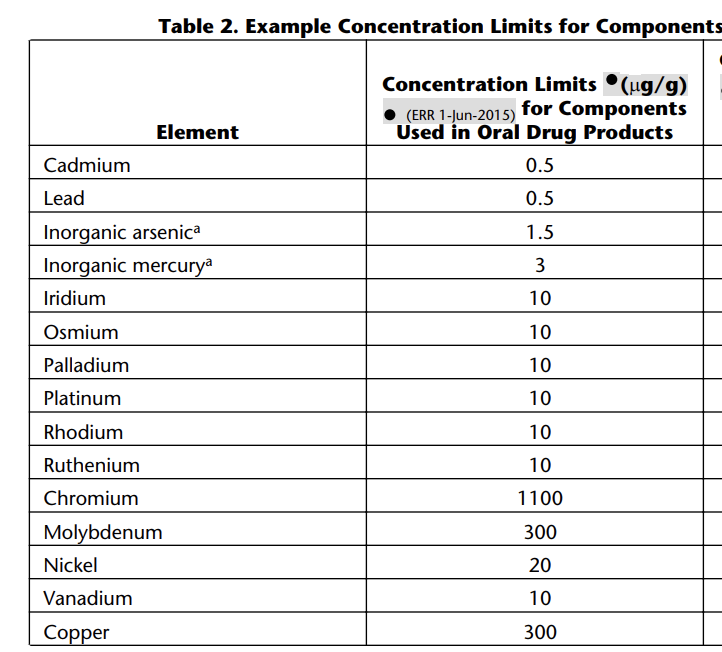
After learning of the FDA’s statement on heavy metals in kratom products, we consulted our testing laboratory. They reviewed our test results and provided the following information: “all metals analyzed in here are at less than limits concentrations assuming that daily [serving] is 10 g. For example, Lead result is 0.450 mg/Kg with the limit of 0.5 mg/Kg. So, it is a PASS result based on USP limits [see chart below].“

We never introduce products to the market that do not pass rigorous quality assurance tests and meet our own high standards. Our company keeps Certificates of Analysis on file for all products, we and are happy to share those with our customers at their request.

Please feel free to contact our customer support team with any questions you may have about our products or practices.

Filed Under: Kratom Tagged With: AKA, compliance, GMP, heavy metals, kratom, lab testing, purity, safety

  • « Go to Previous Page
  • Go to page 1
  • Interim pages omitted …
  • Go to page 10
  • Go to page 11
  • Go to page 12
  • Go to page 13
  • Go to Next Page »

Primary Sidebar

Latest Resources

  • Kratom Near Me? Why Online Beats Your Local Shop
  • Kratom Laws in 2026: Your State-by-State Guide
  • 20 Years of Trust: Phytoextractum’s Journey
  • HHS Bans 7OH: A Win for Safe, Natural Kratom
  • Last Chance: Louisiana Kratom Ban on 8/1

Resource Categories

  • CBD
  • Guide
  • Kava
  • Kratom
  • Mushrooms

Search Resources

QUICK LINKS

    • Home
    • Discount Coupons
    • Bitcoin
    • FAQ
    • Affiliates


INFORMATION

    • About Us
    • Sitemap
    • Lab Testing
    • COD
    • Customer Rewards


CUSTOMER SERVICE

  • Contact Us
  • Shipping & Returns
  • Privacy Policy
  • Terms & condition
  • My Account
Bitcoin logo

© 2023 Phytoextractum - Resources. All Rights Reserved.