Last updated October 8, 2026. Update log at the end of this post.
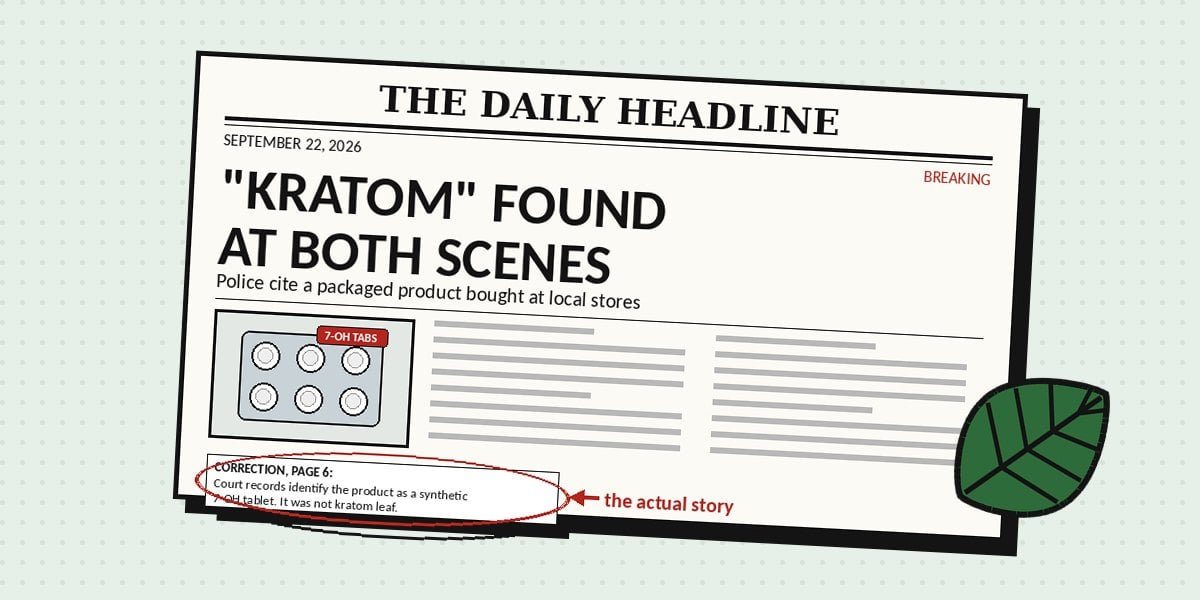
If you follow kratom news, the last two weeks have been loud. Two University of Mississippi students died on September 21, and the first reports said packaged kratom was found at both scenes. The story has moved a long way from that first sentence since then. The first sentence is still the one most people heard.
We have been selling kratom since 2005, which means we have watched this cycle more than once. So here is the short, sourced version: what was reported, what the court record now says, and how our products are made and tested, so you can judge them on something better than a headline.
In brief
- Court records identify the product as Smax Pseudo-DHM tablets. The package lists pseudoindoxyl, MGM-15 (DHM), and 7-hydroxymitragynine.
- Two of those are lab-made derivatives of 7-OH that federal regulators say do not occur in the kratom plant. They have been Schedule I controlled substances since August 26, 2026.
- Kratom leaf and its main alkaloid, mitragynine, are not federally controlled. The DEA’s order says so in plain terms.
- A toxicology report cited by prosecutors lists mitragynine, MGM-15, and mitragynine pseudoindoxyl as present. No cause of death has been announced.
- Phytoextractum products are made from Mitragyna speciosa leaf, in a cGMP facility, and tested by outside labs. Nothing synthetic is added.
What’s being reported
- September 22–24Local police say “packaged kratom” purchased at retail stores was found in both investigations. National outlets run with it. Some headlines reach for the “gas station heroin” tag.
- September 28A Lafayette County affidavit names the product: Smax Pseudo-DHM tablets, with pseudoindoxyl, MGM-15 (DHM), and 7-hydroxymitragynine printed on the package. Two employees of an Oxford vape shop are arrested.
- September 29–30The American Kratom Association asks news organizations to identify the product by name instead of calling it kratom, and holds a press conference in Oxford.
- October 2–3Federal prosecutors charge the shop’s manager and his son with possession with intent to distribute a controlled substance. Their filing says a toxicology report found mitragynine, MGM-15, and mitragynine pseudoindoxyl in both students, the same compounds as the tablets.
- October 8Autopsy and toxicology reports have not been released. Investigators have not said what caused either death.
What the record actually says
The product on the label was not leaf. Mitragynine pseudoindoxyl and MGM-15 are chemically modified forms of 7-OH. The DEA placed both, along with a third compound called MGM-16, in Schedule I on August 26, 2026, after HHS confirmed they do not occur naturally in the plant. That order runs through August 2028. In other words, the tablets in this case were being sold roughly a month after their listed ingredients became federally illegal.
The leaf is not what got scheduled. The same DEA notice states that it does not apply to botanical kratom products containing naturally occurring 7-OH. Mitragynine and Mitragyna speciosa leaf remain federally uncontrolled. A separate DEA notice covering concentrated 7-OH above a set threshold was filed in July and has not been finalized as of this writing.
“Present in toxicology” is not “cause of death.” A toxicology screen lists what was found. The cause of death is a medical examiner’s ruling, and that ruling has not been made public. We are not going to guess at it, and we would ask readers not to either.
Why the word “kratom” stuck. These products are sold on the kratom shelf, often with “kratom” on the package. Police described what they found the way the package described it. Reporters quoted the police. By the time the ingredient list surfaced in court paperwork a week later, the first version of the story had already done its traveling.
| Leaf product | What the affidavit describes | |
|---|---|---|
| Made from | Dried Mitragyna speciosa leaf, or an extract concentrated from that leaf | Laboratory-made derivatives of 7-OH pressed into tablets |
| Federal status | Not controlled | Schedule I since August 26, 2026 |
| How you’d know | Ingredient panel names the plant; a lab report is available | Label says “pseudo,” “DHM,” “MGM-15,” or lists 7-OH in milligrams |
A tablet is a format. An ingredient list is a fact.
— Phytoextractum
Why Phytoextractum products are different
Not different as a slogan. Different in ways you can check.
- Leaf, start to finish. Every kratom product in our catalog, including powders, capsules, softgels, tablets, and our Platinum and UEI extracts, is made from Mitragyna speciosa leaf. Our extracts concentrate the alkaloids already in the leaf. We do not add synthetic or isolated 7-OH, mitragynine pseudoindoxyl, MGM-15, or any other lab-made derivative to anything we sell.
- Yes, we sell kratom tablets. They are compressed leaf. A tablet is just a shape. What matters is the ingredient panel, and ours names the plant.
- GMP, with outside labs. Phytoextractum is an American Kratom Association GMP Qualified Kratom Vendor. Products are tested for identity, heavy metals (arsenic, cadmium, lead, mercury), and microbial safety, using two or more independent labs. Details are on our quality assurance page, and a certificate of analysis is available on request for any product.
- Twenty years of doing this the same way. We were one of the first kratom vendors in the United States. The receiving, testing, and quarantine procedures we use today were built over two decades, not two weeks.
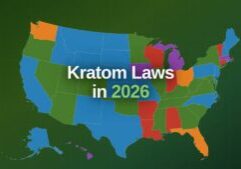
- We follow the map. Kratom’s legal status varies by state and city, and we do not ship where it is prohibited. Our shipping restrictions page is kept current.
Three questions to ask about any kratom product
- What does the ingredient panel say? A leaf product names the plant. Walk away from anything listing 7-OH in milligrams, or using “pseudo,” “DHM,” “MGM-15,” or “isolate.”
- Can you see a lab result? Identity and contaminant testing at minimum. If the seller can’t produce one, that is your answer.
- Who made it? A named company, a real facility, a GMP program, and a track record. A gas-station blister pack with a cartoon on it does not have any of those.
Judge the product, not the headline.
Read how we test, or request a certificate of analysis for anything in our catalog.
How We Test Request a COAQuick answers
Was the product in the Ole Miss case kratom?
Not by its own label. The affidavit lists pseudoindoxyl, MGM-15 (DHM), and 7-hydroxymitragynine as the ingredients of Smax Pseudo-DHM tablets. The first two are synthetic derivatives of 7-OH that do not occur in the kratom plant, and both have been federal Schedule I controlled substances since August 26, 2026.
Has a cause of death been determined?
Not publicly. A federal court filing describes a toxicology report listing mitragynine, MGM-15, and mitragynine pseudoindoxyl as present in both students. Autopsy and toxicology reports have not been released, and investigators have not said what caused either death.
Do Phytoextractum products contain 7-OH?
Only what occurs naturally in kratom leaf, at trace levels. We do not add synthetic or isolated 7-OH, mitragynine pseudoindoxyl, MGM-15, or any lab-made derivative to any product. Our extracts concentrate the leaf’s own alkaloids. A certificate of analysis is available on request.
Update log
October 8, 2026 — Published. Cause of death not announced; 7-OH threshold scheduling order not yet finalized.
Sources
- American Kratom Association, “Calls on News Outlets to Correct the Record,” September 29, 2026.
- U.S. Drug Enforcement Administration, “DEA to Temporarily Schedule 7-OH and Related Substances,” July 1, 2026.
- Federal Register, temporary placement of mitragynine pseudoindoxyl, MGM-15, and MGM-16 in Schedule I, effective August 26, 2026.
- Associated Press / U.S. News, “Prosecutors Probing Deaths of 2 Ole Miss Students Charge Shop Clerk, Son,” October 2, 2026.
- WMC Action News 5 / Gray News, “Shop clerk, son charged with selling illegal kratom amid probe into Ole Miss student deaths,” October 3, 2026.
- CNN via ABC7, “How are kratom and drugs like 7-OH different? Explaining products found near dead Ole Miss students,” October 4, 2026.
- FOX13 Memphis, “Investigators find same tablets in rooms of two Ole Miss students who died,” September 29, 2026.
This article is for informational purposes only and reflects publicly available records as of the dates shown. It is not legal or medical advice. These statements have not been evaluated by the Food and Drug Administration. Phytoextractum products are not intended to diagnose, treat, cure, or prevent any disease.